

Black or dark brown
Smooth leather with matching thread keeps the pairing simple. Dark brown offers a warmer alternative to black.
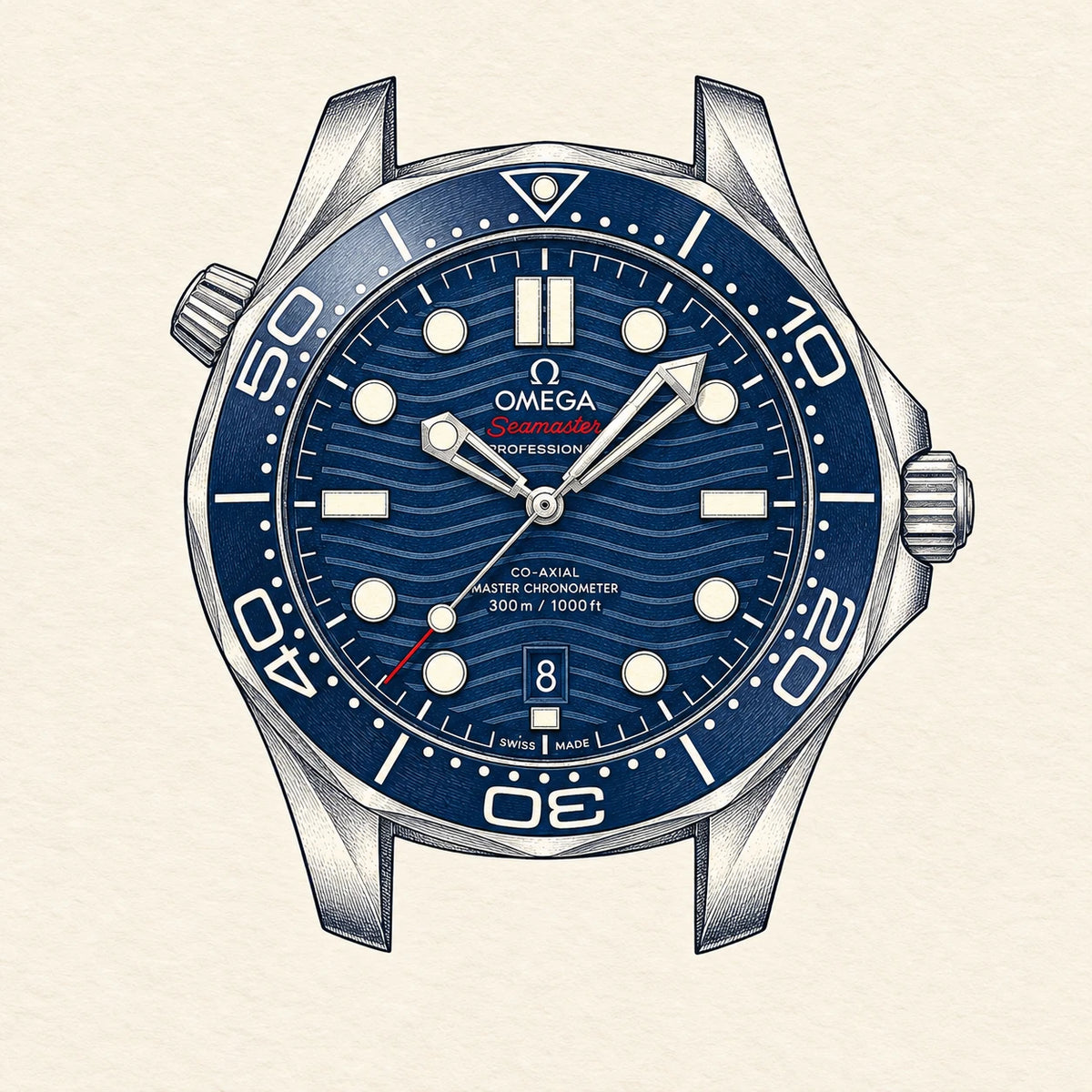
Omega · Seamaster Diver 300M
From blue rubber to a considered leather alternative.
This guide records 20 mm at the watch end. Keep that measurement separate from the case diameter and buckle-end width.
Measure both halves of a comfortable strap. Note the hole you use and where the buckle sits beneath your wrist.
Check the strap’s thickness and end shape against the watch and its fittings. Ask us if you are unsure about the hardware.
Keeping your current buckle? Check its inside width and the strap construction it needs. Include those details in a custom inquiry.
The blue rubber Diver is already a deliberately sporting combination. Switching to leather is most useful when it creates a distinct second role for the watch, such as relaxed daily wear away from water. Preserve the blue dial’s depth with a complementary surface instead of trying to imitate the moulded factory strap.
The exact reference is 210.32.42.20.03.001: a 42mm steel Diver with polished blue ceramic dial and bezel, waves and a date window at six. OMEGA supplies it on blue rubber. That original configuration should stay in the fitting brief even when a similar watch head appears on a bracelet.
OMEGA’s labelled between-lugs measurement is 20mm. Examine the rubber’s shaped ends alongside the proposed leather, since matching width does not recreate the original contour. The replacement needs suitable end thickness and retaining-bar clearance before it can be considered secure on this case.
Retain the original rubber and buckle rather than cutting them to recover components. Decide whether a leather replacement will have its own buckle or a specifically assessed reuse arrangement. The installer should confirm the bars engage fully and that the leather can move without rubbing against the case.
Rubber and leather flex differently, so measure the wrist and note the comfortable position of the current buckle. Choose a hole range that leaves room for daily adjustment. A leather pair that merely duplicates the visible rubber lengths may not put the new buckle in the same place.
For Da Luca, describe this as a conversion from factory blue rubber and include photographs of its ends and buckle. Compare length, taper and watch-end profile together. Keep the original rubber available for appropriate water use; the watch’s diving identity does not establish ordinary leather’s resistance to immersion.
Deep brown gives polished blue a warm counterpoint and a clear change from the original strap. Navy offers a more continuous appearance, while black makes the bezel stand out. A matte or softly grained finish adds contrast to the ceramic without introducing an unrelated bright colour.
Smooth leather with matching thread keeps the pairing simple. Dark brown offers a warmer alternative to black.
Tan brings a warm color. Suede or a visible grain adds texture; matching thread keeps the stitching subtle.
Muted olive, rust and gray offer another direction. Compare the shades in the product photos with the watch you own.
Ready-made or custom
With a ready-made strap, the leather and sizing are already chosen. Check the listed width, long and short lengths, thickness and buckle size before ordering.
For a custom discussion, provide the exact watch reference, confirmed watch-end width, preferred lengths and buckle details. The available materials and construction still need to suit your watch. Ask about fit
Before you order
This guide records 20 mm at the watch end. Keep that measurement separate from the case diameter and buckle-end width.
Keep the watch-end width exact. A different buckle-end width describes the taper of a strap; it does not replace the watch-end measurement.
Width is one part of fitting. The end shape, thickness, hardware and clearance also matter. Read the product specifications and ask Da Luca if any part is unclear.
Measure the long and short halves of your current comfortable strap, excluding the buckle. Include those measurements and your preferred fastening position in a custom inquiry.
No. The numerical opening is only the starting point. The rubber has its own moulded shape, while leather has different thickness and bend characteristics. Have the actual proposed construction assessed rather than relying on the shared width alone.
Your cart is currently empty.
Start Shopping